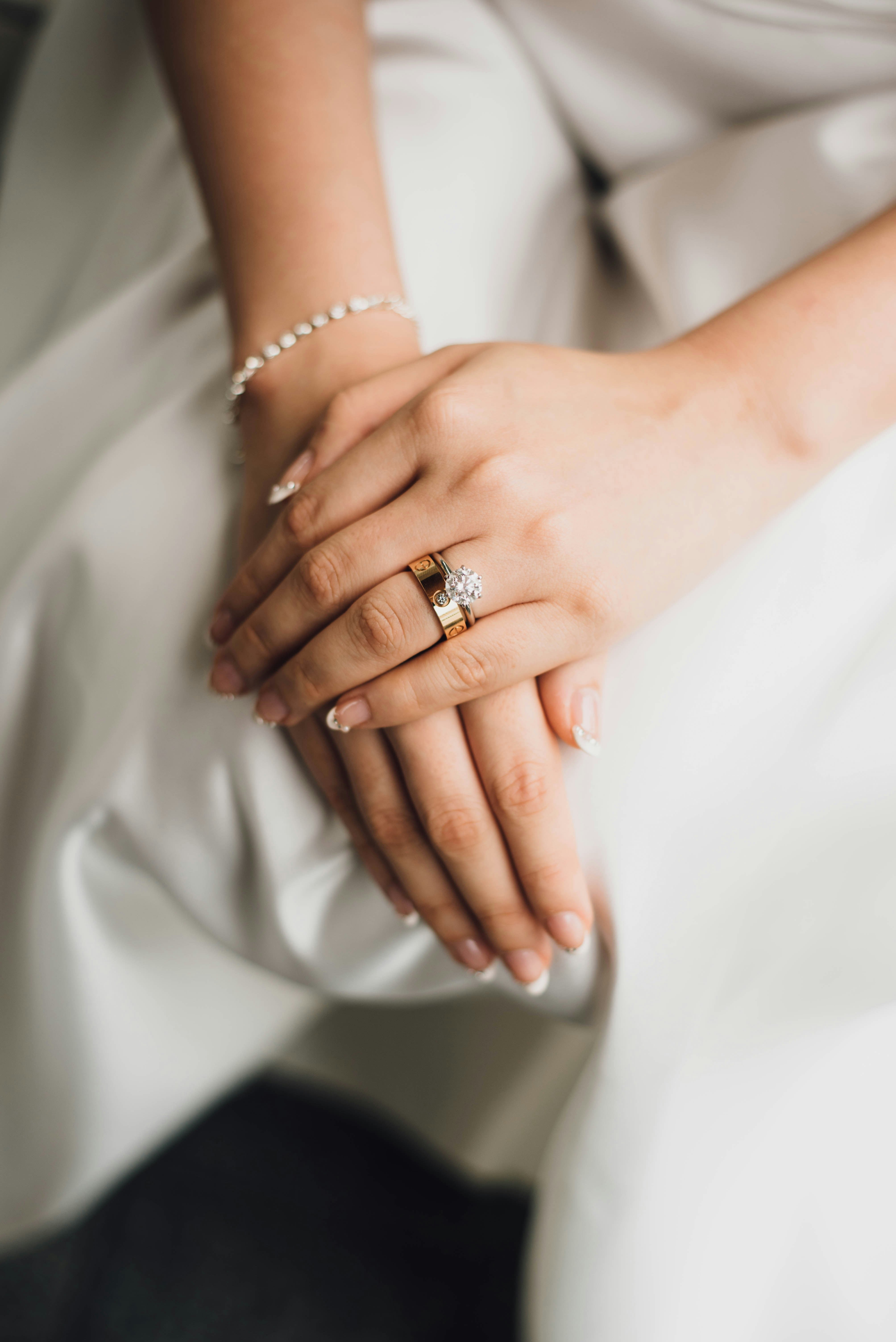
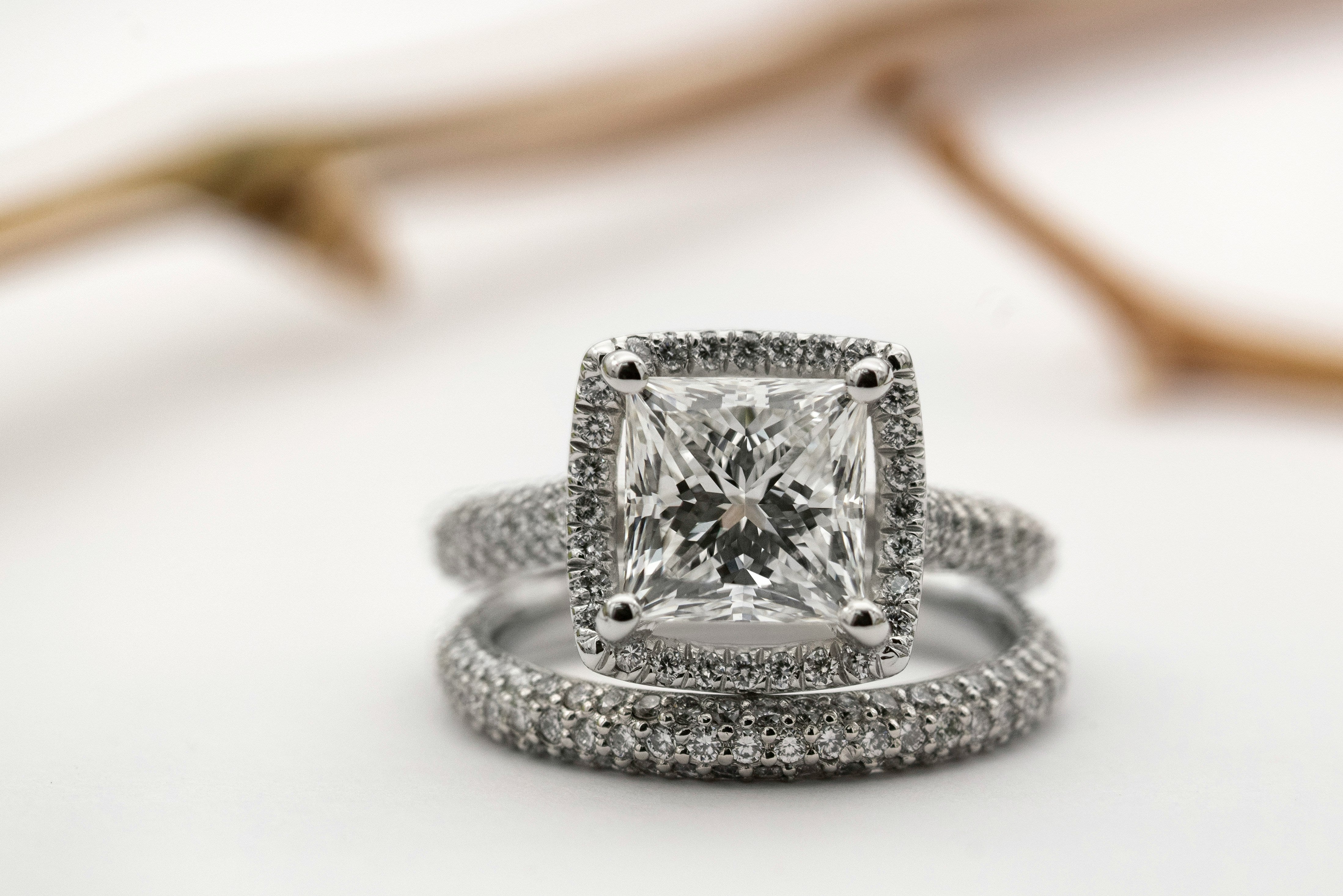
The metal you choose frames your diamond and defines the character of your jewellery for decades. Each metal has distinct qualities — in colour, durability, maintenance, and price. Here's everything you need to know.
Yellow Gold

Yellow gold is the most traditional and timeless choice in fine jewellery. Its warm, rich tone pairs beautifully with diamonds of all grades — and it has been the symbol of luxury for thousands of years.
Purity Explained
| Karat | Gold Content | Characteristics |
|---|---|---|
| 14K | 58.3% gold | Most popular. Durable, affordable, rich colour. |
| 18K | 75% gold | Deeper colour, softer, more prestigious. Preferred for high-end pieces. |
| 22K | 91.7% gold | Very rich colour, quite soft. Better for occasional wear. |
Best for: Warm skin tones · Traditional and vintage styles · Lower colour-grade diamonds (K–M) where yellow gold masks warmth beautifully.
White Gold

White gold is yellow gold alloyed with white metals (typically palladium or nickel) and finished with a rhodium plating that gives it a bright, mirror-like white appearance. It's the most popular choice for diamond engagement rings today.
Key Properties
- Bright, contemporary white finish — identical in appearance to platinum at a lower price point
- Rhodium plating wears over time and will need re-plating every 1–3 years (a simple, inexpensive service)
- Available in 14K and 18K
- 14K white gold is harder and more scratch-resistant than 18K due to higher alloy content
Best for: Cool or neutral skin tones · Modern and minimal styles · Buyers who want the platinum look at a more accessible price.
Rose Gold

Rose gold gets its distinctive blush-pink hue from a higher proportion of copper in the gold alloy. It's romantic, distinctive, and one of the most flattering metals across skin tones.
Key Properties
- Warm pink tone that deepens slightly with age — many consider this patina beautiful
- Copper content makes it very durable — often harder than yellow or white gold
- Doesn't require rhodium plating — the colour is natural to the alloy
- Available in 14K and 18K (14K has a deeper blush; 18K is more subtle)
Best for: All skin tones, particularly warm and olive complexions · Romantic and vintage styles · Buyers who want a distinctive, less traditional look.
Platinum

Platinum is the premium choice in fine jewellery — naturally white, hypoallergenic, and extraordinarily durable. It's rarer than gold and denser, which gives platinum jewellery a satisfying weight.
Key Properties
- Naturally white — never fades or requires re-plating
- Hypoallergenic — ideal for sensitive skin
- Extremely dense and durable — prongs hold diamonds more securely over time
- Develops a soft patina with wear — can be polished to restore a high shine
- Typically 95% pure platinum (stamped 950 Pt)
- Higher price than gold due to rarity and weight
Best for: The most important, enduring pieces · High-grade colourless diamonds (D–F) where a white setting enhances the stone's colourlessness · Sensitive skin.
Metal Comparison
| Feature | Yellow Gold | White Gold | Rose Gold | Platinum |
|---|---|---|---|---|
| Colour | Warm yellow | Bright white | Blush pink | Cool white |
| Durability | Very good | Very good | Excellent | Excellent |
| Hypoallergenic | Generally yes | Check alloys | Generally yes | Yes |
| Maintenance | Low | Re-plate 1–3 yrs | Low | Low |
| Price (relative) | $$ | $$ | $$ | $$$ |
Need help deciding?
Our specialists can show you the same diamond in different metals side by side — the difference in character is remarkable in person. Book a free consultation and we'll help you find the perfect combination.
Book a Consultation